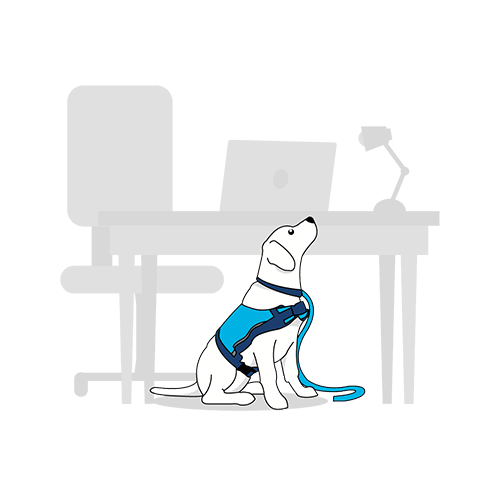


Did you know that assistance dogs in training go to school? Puppy Kindergaten, to be exact. Assistance Dogs Australia (ADA) has opened a new Puppy Kindergarten for their youngest and cutest canines. This marks the exciting first step on their journeys to becoming internationally accredited Assistance Dogs.
This new program has already boosted ADA’s ability to breed, train, and place Assistance Dogs with people with disability across Australia.
In this article
What is Puppy Kindergarten?
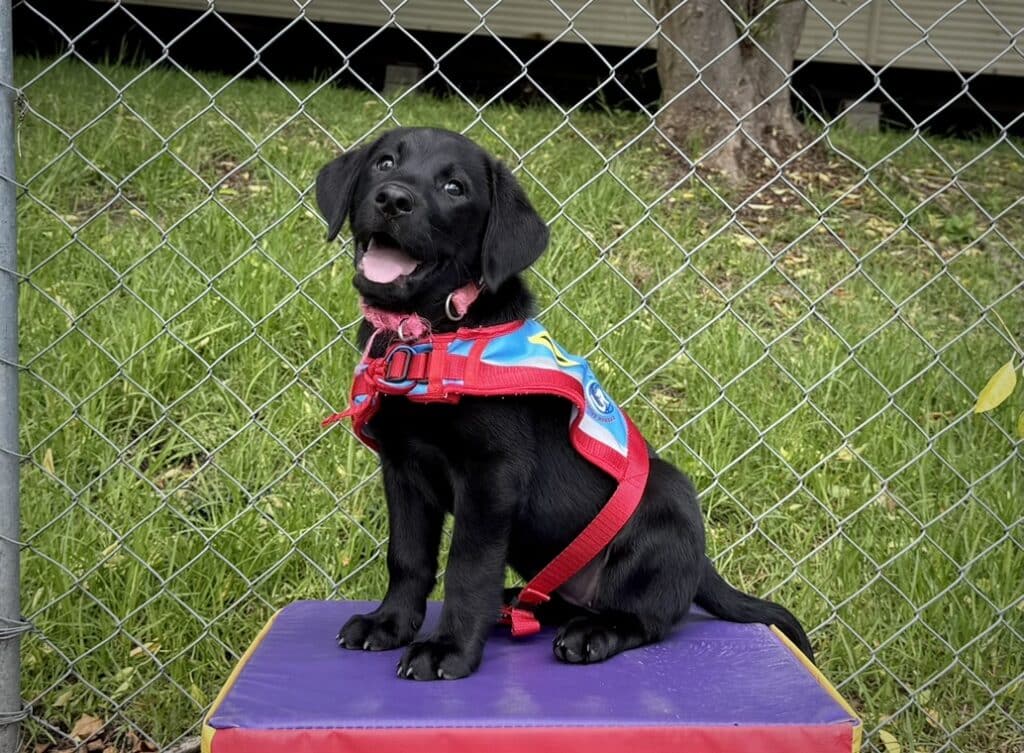
ADA’s Puppy Kindergarten is an early-stage socialisation and training programme for assistance dogs in training, one of the first of its kind in Australia. Starting at eight weeks old, puppies spend 10 weeks learning basic skills to set them – and their volunteer carers – up for success. The program is based on cutting-edge canine research from Duke University in the USA.
Using methods developed by Dr Brian Hare and other experts, ADA helps puppies develop at the right pace, meeting their behavioural and enrichment needs while adapting to each pup or litter individually.
ADA’s Puppy Kindergarten facility
The new facility at ADA’s Waterfall campus in Sydney’s Sutherland Shire can house up to 20 assistance dogs in training at a time. It has purpose-built training equipment, play yards, kennels for warmth and shelter, and a training shed. Puppies receive round-the-clock care from ADA’s trainers and kennel staff.
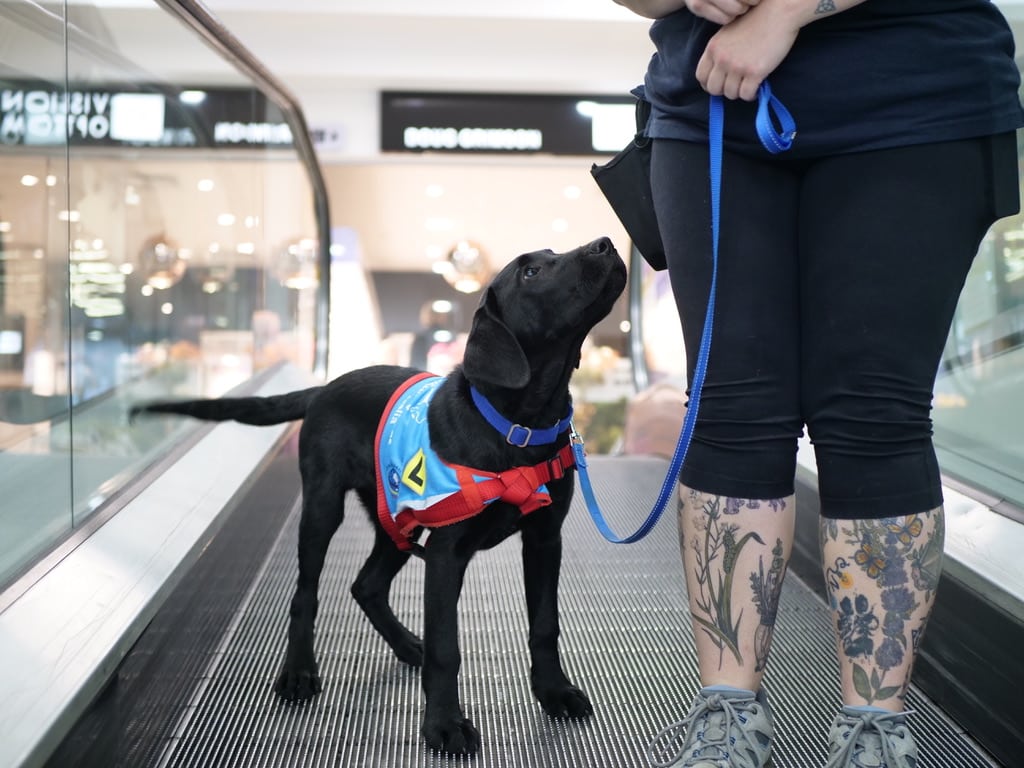
Each day, after breakfast, the puppies go off site to practice socialisation skills. Early exposure to things like travelators, buses, and trains has already improved their confidence and learning. After lunch and a nap, they continue skill-building in the training shed and enjoy playtime in fenced enrichment yards.
Outcomes for the assistance dogs in training
So far, puppies in the program are learning faster than those trained only at home during their first 10 weeks. Along with their names, they learn cues such as sit, down, wait, leave, come, dress, toilet, and stand. These basics, taught consistently over 10 weeks, give them a strong start.
Ken Innes, ADA’s Head of Program Delivery, said after the first two classes graduated:
“This pilot has laid the foundation for a world-class program. The puppies have had a fantastic head start in their socialisation and behaviour, and we’re eager to see how they progress once they transition into volunteer homes.”
Those puppies are now with volunteers in the community, and feedback has been overwhelmingly positive.

Supporting volunteers
Caring for an eight-week-old puppy is much like caring for a baby – they cry, aren’t toilet trained, and don’t sleep through the night. This early period can be tough on volunteers.
Puppy Kindergarten helps by teaching basic skills and calming techniques before the puppies move into volunteer homes, easing the pressure on carers.
Aiwei, an ADA volunteer, is currently raising her second ADA assistance dog in training, Elsie, after her first puppy, Sailor, moved on to Advanced Training at ADA’s National Training Centre. Elsie was part of the second group to attend Puppy Kindergarten.
“When Elsie first arrived, my heart just melted. She’s such a sweet, gentle little lady – friendly, quick to settle in, and her first night went beautifully. What amazed me most is that she never chews anything she shouldn’t – no slippers, no pant legs! When Sailor first came, she did have this habit and it took us a few weeks to find a balance (we ended up hiding all the slippers!).
Elsie’s time at Puppy Kindergarten has definitely made things easier for me as a volunteer. For example, she already knows how to slip her head into her collar and walk straight into the crate when asked.”
By mid-September 2025, ADA’s Puppy Kindergarten will have welcomed its ninth litter – nearly 50 puppies in total. Even though it hasn’t been running a full year, early results show the program is improving training and placement outcomes for future Assistance Dogs. The long-term outlook is promising for ADA’s mission to empower connection, inclusion, and independence for people with disability.
Insure your assistance dog or companion animal
Assistance Dogs are incredible partners, helping their handlers get around and access public places. To keep doing their amazing work, they need regular vet check-ups and quick treatment if they get sick or injured.
Getting care on time keeps them healthy and means they can get back to helping sooner. But we all know vet bills can add up fast – that’s why looking into pet insurance for Assistance Dogs makes sense.
Blue Badge Insurance has you covered, whether your dog is an Assistance Dog or a beloved pet. Take a look at our pet insurance and Assistance Dog insurance packages today.