

Driving involves all your senses. When you’re at the wheel you use your physical, cognitive and even emotional senses to safely control your vehicle. That’s why assessing fitness to drive with an occupational therapy driving assessment may be required to get your licence for driving with disabilities.
Assessing fitness to drive is tailored to a person’s individual cognitive or physical injury or disability. It’s designed to make sure you’re safe when driving and identify any driving modifications you might need.
Fitness to drive is based on clinical and functional assessments. You need to do this assessment to get car modifications endorsed on your licence. But who is qualified to assess fitness to drive and what does the test involve? Blue Badge Insurance shares the answer here.
In this article
Who is qualified to assess fitness to drive?
A driver trained occupational therapist (DTOT) can assess your fitness to drive with an occupational therapy driving test. A DTOT is a specialist occupational therapist because in addition to a degree in occupational therapy, they also need post-grad driver training.
To find out more, Blue Badge Insurance interviewed a driver trained occupational therapist. Nicole Young has twenty years of experience as an occupational therapist has specialised in supporting driving with disability since 2008.
Austroads Fitness to Drive guidelines
Nicole says that because every state and territory has its own roads and traffic department, some disability driving assessment rules may vary depending on where you live. She explains “we have the Austroads Assessing Fitness to Drive medical guidelines that covers all states and territories of Australia. We also have the Occupational Therapy Driver Trained Drive Competency Guidelines.”
Your driver trained occupational therapist will structure the disability driving assessment along these guidelines and according to where you live. Additionally, they’re also aware of the Australian design rules and compliance laws. It’s also important that you find a DTOT that understands the particular disabilities you live with.
Includes several fitness to drive safety tests
During the disability driving assessment, the DTOT assesses physical and cognitive safety for driving with disability. A person may have an acquired brain injury or there could be a progressive condition that’s going to change over time that needs to be taken into account.
1. Off road test
First there’s an off-road assessment that is theory based testing. Vision, cognition, and physical capacity are all assessed to help establish what the driver’s functional capacity and needs are. This ensures that the OT knows what may be needed in the on road test.
2. On road test
Next is the on-road assessment to see whether the driver has capacity to drive and/or whether they may need to drive a modified car. This helps assess whether changes are needed to make the vehicle accessible for driving with disability. And it helps assess how many and what type of modifications may be needed.
3. Vehicle options
Within that same initial assessment the DTOT may start showing the driver vehicle modification options. At this stage the driver may also get to trial these options. Once these steps are completed the DTOT will make recommendations for the modifications they think are a good fit. Let’s take a look at these steps a little more closely in these next few sections…

Occupational therapy driving assessment steps
As Nicole says, the occupational assessment is tailored around the competency guidelines for driving with disability. She also tailors it to each driver and their current driving status. For example, when she knows you’re going to have a disability driving assessment because you need to drive from wheelchair, she will already plan to have hand controls ready for you to try.
Here’s a quick look at the steps Nicole takes a client through during the occupational therapy driving assessment in general:
General steps during the fitness to drive assessment (off road test)
- If I get a new referral, the first thing I do is get a medical consent to make sure they’re fit for the assessment.
- Next I do a license check to see whether their license is current, suspended, or about to be suspended. Because if their license has been suspended or cancelled, I can’t take them on road.
- When we first meet, we do the theory assessment that includes checking if the driver meets the vision guidelines of Austroads.
- We look at their physical abilities. So whether there’s strength issues or sensation issues, what their response and reflex times are like.
- Then we do the cognitive testing, which again is a standardized battery of tests. I check whether they complete certain tasks without assistance and how long it’s taking them to complete those different assessments.
- I will also get a general driving history from them, as well as a general medical history and look at what sort of vehicle they’re driving at the moment. This part is also about establishing what their driving looks like across the standard week.
- It is important to know what they’re expecting from the assessment because we’re also wanting to gauge what their level of insight is like and work with them in understanding their needs.
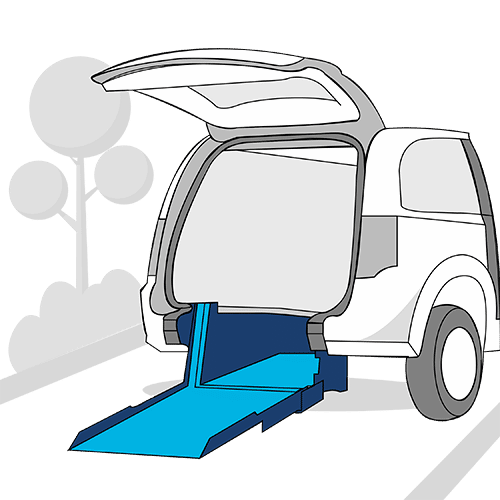
- I clarify what their transfers are like because if they can transfer independently, I know they can get into the standard modified car. Then we will use it for the assessment. If they are a hoist transfer or they’re unable to independently transfer, we’re now lucky that we can do drive from wheelchair assessments. Then I just book the drive from wheelchair van for the assessment.

Getting in the car (on road test)
The next step is trying out the wheelchair accessible vehicle or converted car. Nicole says:
“Before the on-road assessment we generally give them 10 – 15 minutes to familiarize themselves with the car because we know it’s a stressful time. It’s an unfamiliar vehicle and there are two strangers in the car with them (the DTOT and the driving instructor).
So we give them a bit of time to get used to the car before looking at different driving skills. For example, we look at their lane position, recall of road law, response times and hazard perception. During this time, we are looking at vehicle control, for instance, can they operate the vehicle pedals or are they able to steer with two hands etc.?
Sometimes we’ve worked that out well before we even get into the car. For example, for my appointments this past week, I knew beforehand that we needed hand controls. So we’d already set the car up with hand controls.
From here the assessment changes a little bit where we’re just in quiet streets, getting them to go forward and backwards. This is just to familiarize and get their head around what the vehicle modifications look like initially. During this time we work out whether it’s an accelerator over ring, IRADs or satellite accelerator etc. that they need. I give them options to see what they’re most comfortable with. At the same time I would be looking at functionality and what suits them best? What are they most fluent with?
I then make the recommendations on their license to the licensing body and outline roughly how many lessons they would need to then develop the competencies.”

Driving lessons to progress things further
After the fitness to drive assessment, the driver trained occupational therapist recommends the license be downgraded to a learner’s permit with conditions added. This is for drivers who are already licenced whereas new drivers will have the conditions added to their learner’s licence requirements from the outset.
The licensing department add the recommended conditions to the license. This means that once you pass your test, you will be allowed to drive conditional to using the necessary driving modifications you need.
Nicole explains: “Next they go and do some lessons with that same driving instructor, with those modifications until they’re competent. And then they would do a disability driving test (for example, with RMS transport for New South Wales) to have the conditions endorsed on their license. And then they would go back to their C class license. The C class conditional license is their C class license but legally they’re only allowed to drive and automatic vehicle with hand controls so it’s therefore conditional on those hand controls.”
The disability driving assessment is a collaboration
In Nicole’s opinion the occupational therapy driving assessment is all about collaboration to find the best driving solutions. She says, “Yes the DTOT is the expert in functional assessment and what the vehicle modifications and legal requirements are and how these all go together.
But the driver brings their own expertise because they’ve been driving for X number of years. Or if they’re a new driver, they’re still the person living with an injury or disability. So they need to be considered because if they’re feeling they’re not being heard then that’s a red flag against the DTOT.
I think that they need to be comfortable. The driver trained OT needs to inform them of what the process will be. Then, they’re not in the dark and can be comfortable with what’s going to be happening.”
In addition to getting ready for your fitness to drive assessment, here are some tips to avoid distracted driving.

Tips for choosing your DTOT
Nicole shares these basic tips for choosing the right DTOT to do the disability driving assessment:
- Location. Depending on where you live, you might not want to drive for hours to see your OT. Try to choose someone who is nearby. (But this isn’t a rule, so much as something you may want to consider).
- Communication. Make sure to choose someone you feel comfortable speaking to. If you’re not comfortable with them you’re less likely to get the best outcome because the assessment is all about collaboration to find the best driving solutions.
- Driver trained. Don’t go to a general occupational therapist when it’s about driving, because that’s such a specific skill.
- Timelines. Unfortunately sometimes people need to get a DTOT in a rush because their license is going to be cancelled within a certain timeframe. In this case, you may want to ask your GP for a referral or choose the State/Territory based OT association to get a contact list.
- Funding. Several funding bodies may fund your fitness to drive assessment, your vehicle modifications or your lessons. Your DTOT can assist you by reporting and submitting quotes to the agency. When choosing a DTOT, speak to them about these options and how they are positioned to help.
Disability car insurance at a discount
Once you’ve had the fitness to drive occupational therapy driving assessment, completed any driving lessons and bought your car and modifications, protecting them is key. Blue Badge Insurance understands your mobility is your independence. So, we offer up to 25% off car insurance for wheelchair accessible vehicles and disability converted cars.
Nicole says: “Blue Badge Insurance offers a competitive rate. From an NDIS standpoint (or any other funding body) Blue Badge also splits up the costing on the quote making it easier to apply for funding. Blue Badge Insurance shows the cost for the vehicle modifications and the cost for the vehicle. So when I’m writing reports, it’s incredibly clear and simple for me as the DTOT to show funding bodies the breakdown of costs.
I’m able to indicate which part of the quote or the premium is purely related to the vehicle mods or the vehicle conversion, and therefore directly related to the disability. So therefore that should be the component that’s funded by iCare or NDIS or DVA, whoever it may be. And I think that that works out better for the client and the funding body.”
Click below to get a quote.